Book a Call
AI Pods
An AI pod is a 3–6 person AI product team we embed in yours to take one feature from prototype to production, typically in 8 weeks. Proposal in 48 hours.
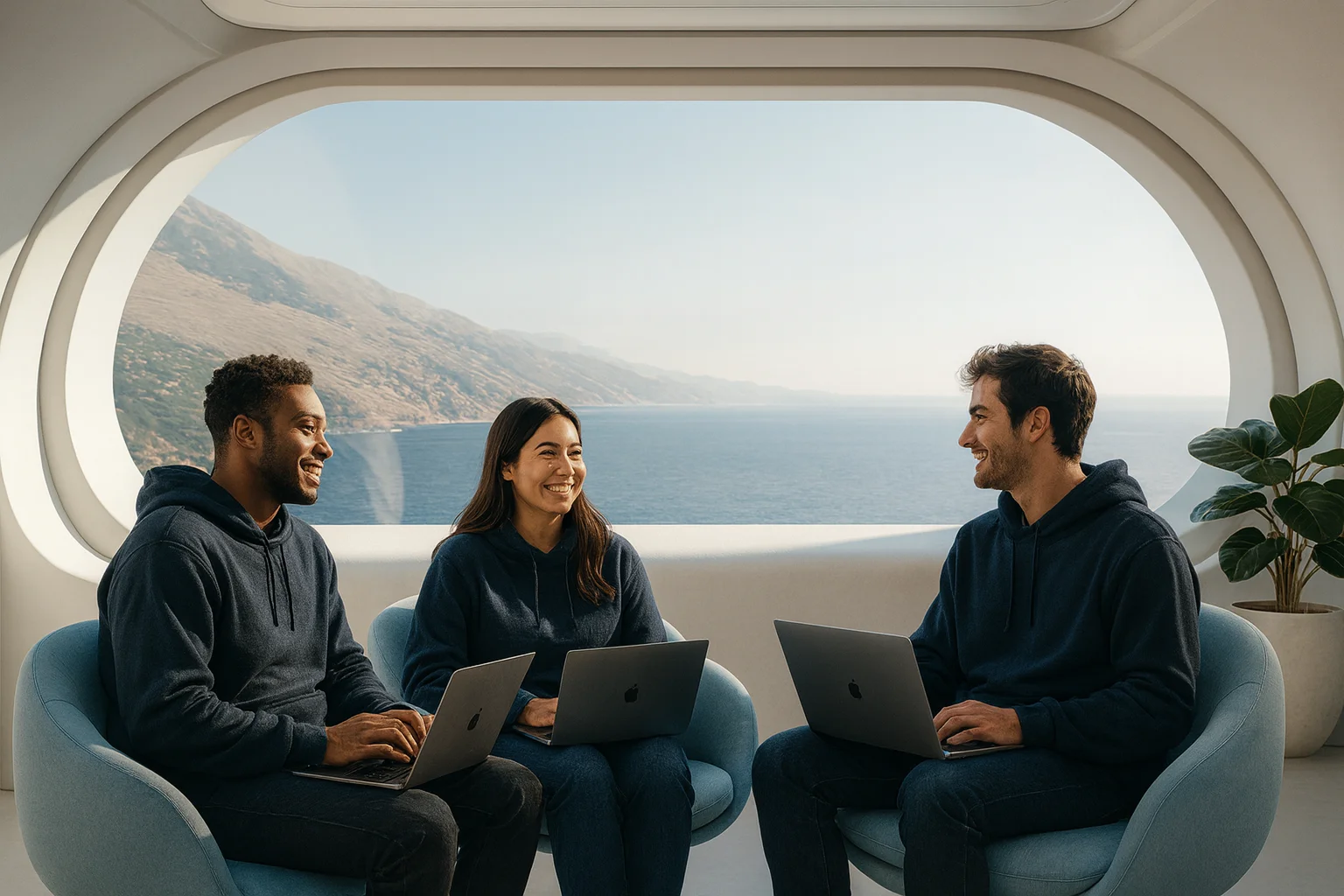
An AI pod is a small product team, usually two AI engineers, a product designer and a product strategist, that Ideaware assembles and embeds in your company to ship one AI feature. You get a proposed pod within 48 hours of a scoping call. The standard sprint runs 8 weeks from discovery to production, and you pay one fixed monthly price for the pod, not hourly billing.
Pods suit companies that want an AI feature in production but don’t have the product team to put a single AI engineer into. If you already have that team and need AI skills inside it, hire individual AI engineers instead.
What’s in an AI pod
A core pod has four people, and most pods run 3–6 depending on the work. The core roles:
| Role | What they own |
|---|---|
| 2 AI engineers | The feature end to end: frontend, backend, model APIs, retrieval, agents and evals (hire AI engineers) |
| 1 product designer | AI interface patterns: conversational flows, loading and error states, what the user sees when the model is unsure (UX/UI designers) |
| 1 product strategist | The business problem, the success metric and the edge cases, with domain knowledge of your market |
We add specialists when the work calls for them: a data engineer for pipelines and vector stores, a machine learning engineer for custom models or fine-tuning, a DevOps engineer for deployment and monitoring, or a QA engineer for test coverage.
What a pod ships in 8 weeks
A pod works in three phases and puts a working feature in front of users by week four. The plan we run:
- Weeks 1–2, discovery and prototype: user and founder interviews, API and model exploration, first Figma flows and prompt experiments
- Weeks 3–4, MVP build: a working version of the core feature with frontend, backend and model integration, released as an internal test or private beta
- Weeks 5–8, production: UX polish, latency fixes, model tuning, monitoring hooks, final deployment and a feedback loop
One SaaS client came to us after six months without a prototype for an AI support feature. The pod we set up (a designer, two AI-fluent developers and a senior product manager) shipped a working support co-pilot in four weeks and had it in production in eight. The full story is in our post on AI product pods.
Pods also grow. For Bucket, we started with an MVP team of senior full-stack engineers, a product designer and a QA specialist, grew it into a 30+ person product organization, and added AI and ML engineers who built workflow automation and predictive features. ScoreApp acquired Bucket for $15 million three years after we took over product development.
The AI tools pod engineers use every day
Every pod engineer codes with AI assistants daily and builds on model APIs for your product. Their working set:
- For their own coding: Cursor, Claude, GitHub Copilot and ChatGPT
- For your product: OpenAI, Anthropic and open-weight models; LangChain or LlamaIndex where they help; pgvector, Pinecone or Weaviate for retrieval; LangSmith or Langfuse for traces and evals
Daily use is common now: 51% of professional developers used AI tools every day in the 2025 Stack Overflow Developer Survey. Good judgment is rarer. In the same survey, 66% named “AI solutions that are almost right, but not quite” as their top frustration. We vet for the judgment.
How we vet AI fluency
Pod engineers pass the same screening as every Ideaware developer, and we accept about 3% of applicants. On top of it, we test AI fluency directly:
- Candidates work a live coding task with their own AI tools while we watch how they prompt, review and correct the output
- They walk us through a time an AI tool gave them wrong code and how they caught it
- They explain an AI feature they shipped: retrieval design, evaluation, cost per request and failure handling
- We check fundamentals without the tools, because an assistant can’t cover for weak system design
Our guide to AI-native developers lists interview questions you can run on your own candidates.
What an AI pod costs
You pay a fixed monthly price per pod, set after the scoping call, with no placement fees. The price follows the pod’s makeup: senior AI engineers run $6,000–10,000 a month each and product designers $4,500–7,500, so a two-engineer core starts around $12,000 a month before design and product roles.
For comparison, one US AI engineer earns an average base salary of $184,757 in 2026 (Built In), about $15,400 a month before benefits and recruiting fees. The developer cost guide has rates for every role we place.
AI pod or AI engineers?
Choose by what you already have. A pod fits when you need a whole team to own one AI feature. Individual AI engineers fit when you have a product team and need AI skills in it.
Frequently asked questions
How many people are in an AI pod?
How fast can a pod start?
What's the minimum commitment?
What kinds of AI projects do pods handle?
Who owns the code and IP?
How is the pod managed?
How is pricing structured?

1,800+ developers placed with 150+ US teams since 2010

Meet your first candidates this week.
Tell us the role and the stack. Within 48 hours you get 3–4 vetted senior developers to interview, and you pay nothing until you hire.